Effective Plan Dates: August 1, 2025 — July 31, 2026
WEX
Flexible Spending Accounts (FSAs) allow you to pay for essential health care expenses that are not fully covered under your insurance plan or dependent care expenses with pretax dollars. By contributing a small portion of your payroll dollars on a pretax basis to an FSA, you can save on the cost of health care expenses or dependent care and reduce your taxable earnings.
How to Use Your FSA
While there is no such thing as free money, a Flexible Spending Account can help your money go a lot further when it comes to paying for health care or dependent care. Even healthy individuals who do not spend a lot of money on health care can benefit from significant tax savings.
Expenses must be incurred by July 31 and submitted to WEX by October 29 for reimbursement.
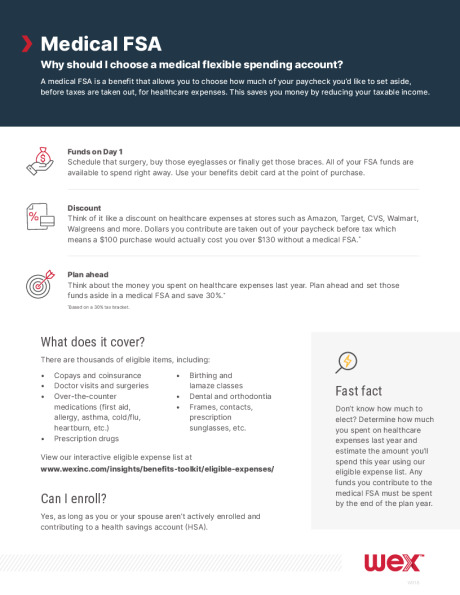
Health Care FSA
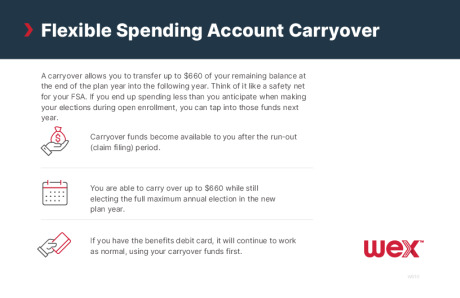
Participants in a Health Care FSA are allowed to carry over up to $660 of unused FSA funds into the following plan year. Any payroll contributions that are not used by July 31 in the excess of $660 will be forfeited.
Reminder: This carryover does not apply to the Dependent Care FSA.
Out-of-pocket expenses your Health Care FSA can pay for:
Medical plan deductibles, copayments, coinsurance, prescription drugs, and behavioral health treatment.
Dental and orthodontia expenses.
Eye exams, glasses, contact lenses and laser eye surgery.
Many treatments for alcoholism or drug addiction.
Smoking cessation or weight loss programs (medically prescribed).
Birth control devices and procedures.
Infertility treatments.
Occupational/physical therapy and chiropractor expenses.
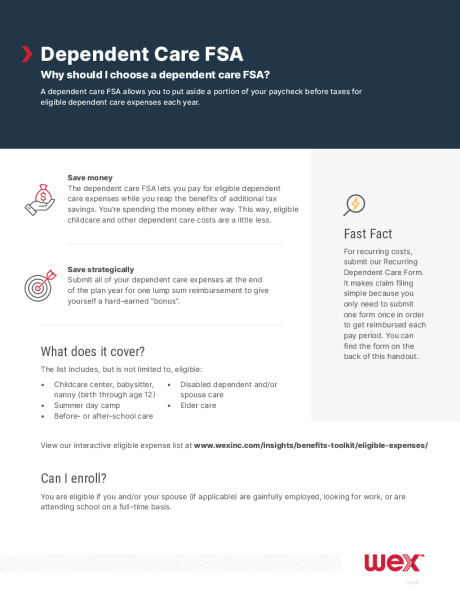
Dependent Care FSA
Out-of-pocket expenses eligible for reimbursement under the Dependent Care FSA include, but are not limited to:
Childcare center, babysitter, nanny (birth through age 12), before- or after-school care, summer day camps, an au pair, disabled dependent and/or spouse care, and elder care.
Maximum Contributions
There are maximum yearly contribution limits for your FSAs:
Health Care FSA: $3,300
Dependent Care FSA: $5,000 ($2,500 if married and filing separate tax returns)
Important: Lemek conducts non-discrimination testing each year that helps ensure Lemek is compliant with FSA benefit regulations. As a result, Lemek may be required to adjust or reduce the participant’s benefit election by making part of the benefit contributions a taxable benefit, thereby revising a participant’s W-2 income.

 English
  Español